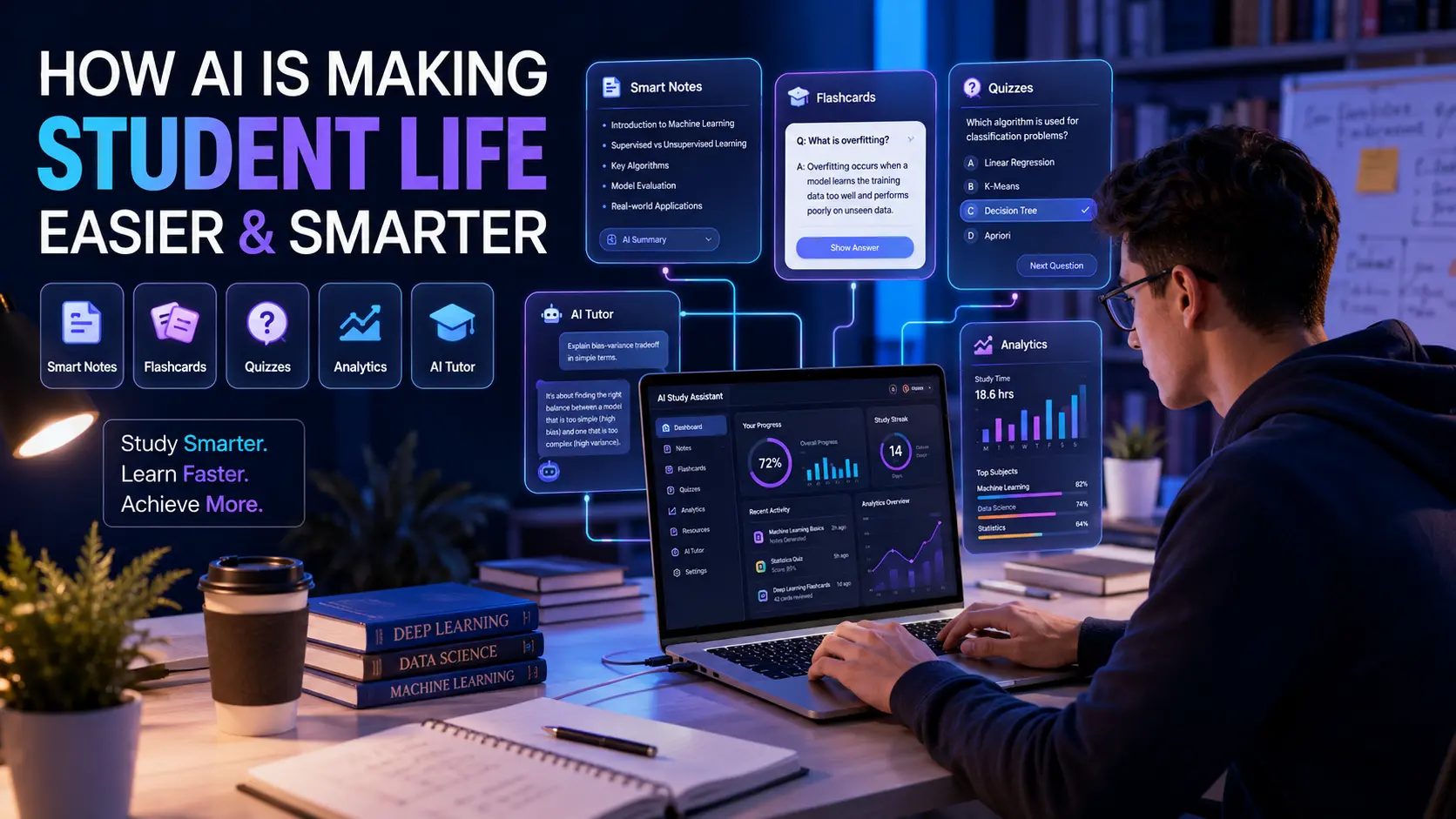
Artificial intelligence is transforming education by helping students learn faster, stay organized, and focus on understanding rather than repetitive tasks.
A few years ago, studying looked very different. Students spent hours copying notes from textbooks, organizing lecture materials, searching for answers online, and creating revision resources manually. Today, artificial intelligence is changing that experience completely. AI is helping students save time, improve productivity, and focus more on learning than on repetitive academic tasks.
From note-taking and research assistance to personalized learning and exam preparation, AI is becoming one of the most influential technologies in modern education. While some people worry that AI will replace traditional learning methods, the reality is that it is helping students learn more efficiently and effectively than ever before.
# The Evolution of Student Learning
Education has always adapted to new technology. Libraries, calculators, computers, and the internet all changed how students learn. Artificial intelligence represents the next major shift. Instead of simply providing information, AI can help organize, explain, summarize, and personalize learning experiences.
Students no longer need to spend hours searching through multiple sources to understand a topic. AI-powered tools can analyze information and present it in a structured format that is easier to understand and review.
# How AI Helps Students Save Time
One of the biggest challenges students face is time management. Between classes, assignments, projects, exams, and extracurricular activities, there never seems to be enough time in the day.
- Generate study notes from lectures
- Summarize long educational content
- Create flashcards automatically
- Build practice quizzes
- Organize learning materials
- Generate presentation outlines
- Assist with research and revision
Tasks that once took hours can now be completed in minutes, allowing students to spend more time understanding concepts and less time organizing information.
# AI and Personalized Learning
Every student learns differently. Some prefer visual learning, others learn through reading, discussion, or practice. Traditional education often struggles to accommodate these differences. AI helps bridge this gap by adapting content to individual learning styles and preferences.
Students can receive explanations tailored to their level of understanding, practice questions that match their abilities, and learning resources designed for their specific goals.
"The greatest advantage of AI in education is not that it knows everything. It's that it can help students learn in the way that works best for them."
# Transforming Educational Videos Into Study Materials
Educational content on platforms like YouTube has become a major part of learning. Students frequently watch lectures, tutorials, crash courses, and educational explanations from experts around the world.
The challenge is that watching a two-hour lecture does not automatically create study materials. Students still need notes, summaries, flashcards, and revision resources.
Modern AI tools can convert educational videos into structured notes, quizzes, and study guides, helping students review information much more efficiently than traditional methods.
# AI-Powered Exam Preparation
Exams are often stressful because students struggle to identify what they know and what they still need to learn. AI helps by generating personalized quizzes, practice questions, and revision plans based on specific subjects and learning goals.
| Traditional Revision | AI-Assisted Revision |
|---|---|
| Manual note creation | Automated note generation |
| Creating flashcards by hand | Instant flashcard generation |
| Searching for practice questions | AI-generated quizzes |
| Generic study plans | Personalized revision plans |
| Time-consuming organization | Automated organization |
# Improving Active Recall and Retention
Research consistently shows that active recall is one of the most effective learning techniques. Instead of simply rereading notes, students test themselves and retrieve information from memory.
AI makes active recall easier by automatically generating practice questions, flashcards, and quizzes from learning materials. This helps students strengthen memory and improve long-term retention.
- Identify weak areas faster
- Improve memory retention
- Build confidence before exams
- Practice under exam-like conditions
- Track learning progress
# Supporting Students Around the World
One of the most exciting aspects of AI is accessibility. Students from different countries, educational systems, and backgrounds can access learning support regardless of their location.
Language barriers are becoming less significant as AI tools provide translations, explanations, and multilingual educational support. This creates opportunities for learners worldwide to access high-quality educational resources.
# Challenges and Responsible Use
While AI offers significant benefits, students should use it responsibly. AI should support learning, not replace it. Understanding concepts, critical thinking, and problem-solving remain essential skills that cannot be outsourced entirely to technology.
The most successful students use AI as a learning assistant rather than a shortcut. They use it to clarify concepts, organize information, and improve productivity while continuing to engage deeply with the material.
# The Future of AI in Education
As artificial intelligence continues to evolve, educational tools will become even more personalized and effective. Future systems may provide real-time learning feedback, adaptive tutoring, intelligent revision scheduling, and highly customized educational experiences.
The goal is not to replace teachers or traditional education. Instead, AI has the potential to help students learn more effectively, reduce administrative burdens, and create more opportunities for academic success.
# Final Thoughts
Artificial intelligence is transforming the student experience in remarkable ways. By automating repetitive tasks, improving organization, supporting active recall, and providing personalized learning assistance, AI is helping students focus on what matters most: understanding and applying knowledge.
The students who benefit most from AI are not necessarily those who use it the most. They are the ones who use it strategically to learn smarter, stay organized, and make the most of their time. As education continues to evolve, AI will likely become an essential companion for learners around the world.
Written by Admin
Chief Editor
Expert contributor at Paperxify. Sharing insights on engineering, AI systems, and student success.