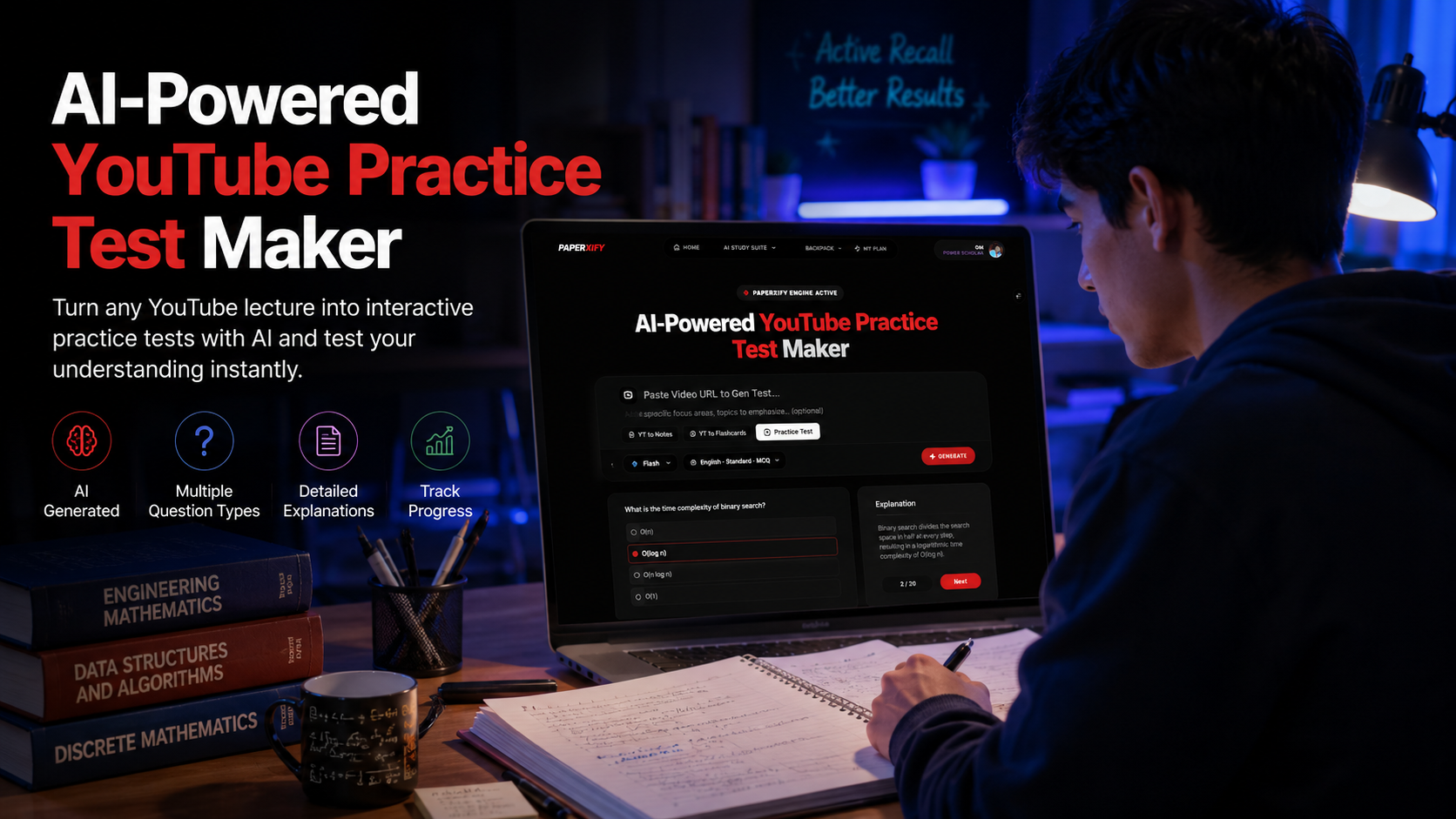
A student-first guide to active recall, AI-generated practice exams, and why testing yourself beats rereading notes every time.
For most of my first year at university, I studied the same way many students do. I watched lectures, highlighted notes, reread chapters, and convinced myself I was making progress. The problem was that when exam day arrived, I could recognize information but couldn't actually recall it. I knew the concepts looked familiar, yet I struggled to answer questions under pressure.
The turning point came when I stopped treating studying as a reading activity and started treating it as a testing activity. Instead of reviewing the same notes repeatedly, I began generating practice exams from lecture content and testing myself every day. That small change completely transformed how I prepared for exams.
# The Problem With Passive Studying
Most students spend hours consuming information. We watch YouTube lectures, attend classes, read textbooks, and review slides. While those activities are important, they create an illusion of learning. Seeing information repeatedly feels productive, but recognition is not the same as recall.
In actual exams, nobody asks whether a concept looks familiar. You're expected to retrieve information from memory, apply it to problems, and explain your reasoning. That's why many students feel confident during revision but underperform during tests.
"The best study sessions aren't the ones where you read the most. They're the ones where you remember the most."
# Why Active Recall Works Better
Active recall forces your brain to retrieve information without looking at the answer first. Every time you successfully recall a concept, you strengthen the memory pathway associated with it. This makes future recall faster and more reliable.
- Identify knowledge gaps quickly
- Improve long-term retention
- Build exam confidence
- Practice real-world problem solving
- Reduce time spent rereading notes
- Measure actual understanding instead of familiarity
# Turning YouTube Lectures Into Practice Exams
One challenge with active recall is creating enough questions. Writing quality questions manually takes time, especially for technical subjects like engineering, computer science, medicine, economics, and mathematics.
This is where AI-powered YouTube practice test generation becomes valuable. Instead of manually creating dozens of questions from a lecture, students can transform educational videos into structured quizzes that test understanding immediately after learning.
# Different Question Types Matter
Not all exams use the same format. Multiple-choice questions are useful, but relying on a single format can leave preparation gaps. Comprehensive exam practice requires a mixture of question styles.
| Question Type | Best Used For |
|---|---|
| MCQ | Concept checks and quick revision |
| MSQ | Testing deeper understanding and multiple correct answers |
| Fill in the Blanks | Memory recall and terminology |
| NAT | Numerical and calculation-based subjects |
| Master Mix | Comprehensive exam simulation |
# How I Structured My Weekly Revision
Instead of spending hours reviewing the same notes repeatedly, I followed a simple study workflow. Every lecture became a source of practice questions. This kept revision active and measurable.
- Watch or review a lecture
- Generate notes and summaries
- Create a practice test from the content
- Complete the test without checking answers
- Review explanations and mistakes
- Retest difficult topics after 48 hours
# The Value of Detailed Explanations
A good question is only half the learning experience. The real improvement happens when you understand why an answer is correct. Detailed explanations help students identify reasoning errors, misconceptions, and weak areas that simple answer keys often miss.
When I reviewed explanations carefully, I started noticing patterns in my mistakes. Sometimes I misunderstood a concept entirely. Other times I rushed calculations or overlooked important details. Seeing the reasoning process improved my performance far more than memorizing answers.
# Who Benefits Most From Practice Test Generation?
Students preparing for AP Exams, SAT, ACT, GCSEs, A-Levels, ATAR, HSC, university midterms, engineering entrance exams, medical entrance tests, and professional certifications can all benefit from active recall strategies.
Subjects that involve large volumes of content—such as biology, chemistry, computer science, economics, history, psychology, and physics—are especially well suited for practice-based learning.
# From Content Consumption to Knowledge Retention
One of the biggest mistakes students make is assuming more content equals more learning. In reality, learning happens when information can be recalled and applied. Watching ten hours of lectures without testing yourself is often less effective than spending one hour solving questions based on those lectures.
"Learning feels productive. Retrieval creates results."
# A Smarter Study Workflow
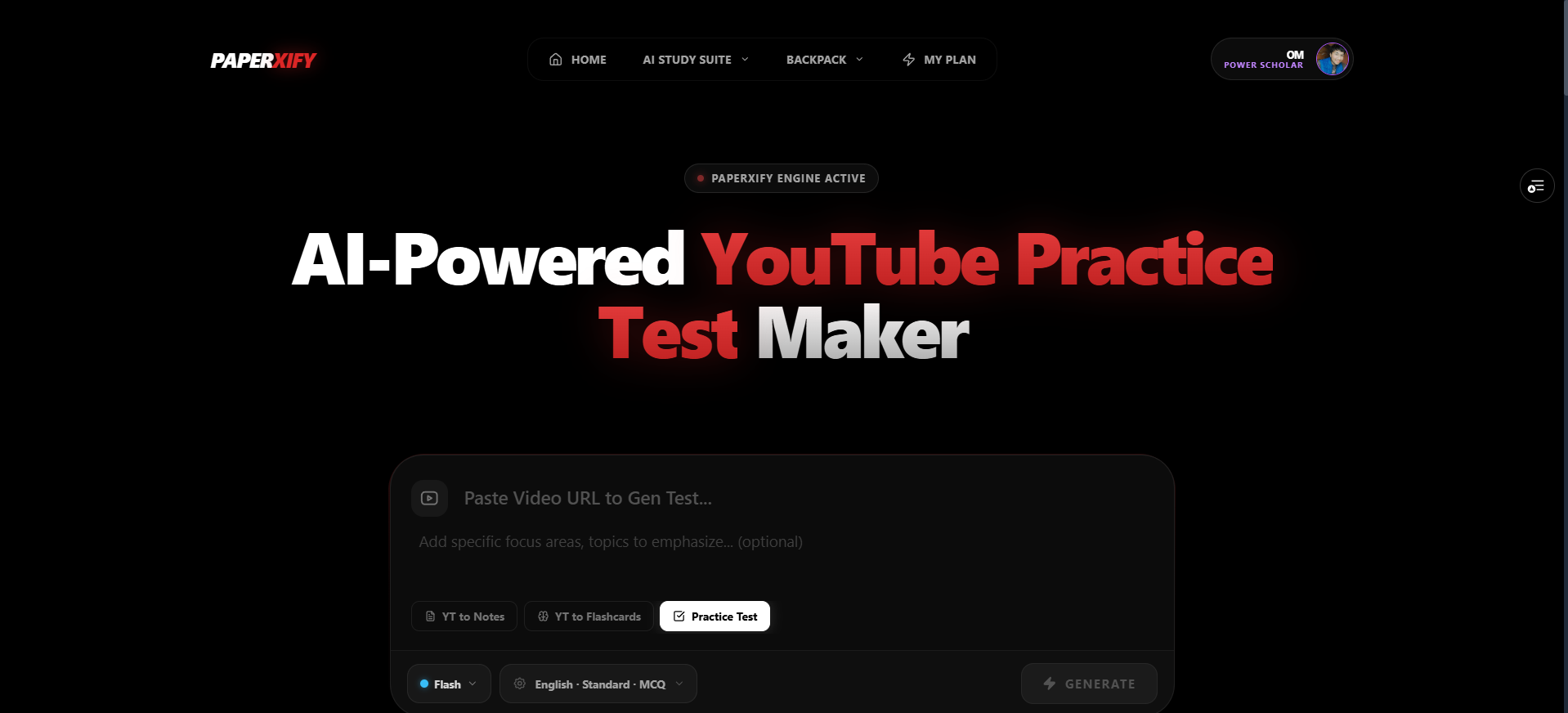
Modern students have access to more educational content than ever before. The challenge is no longer finding information. The challenge is transforming information into understanding. Practice tests bridge that gap by converting passive learning into active engagement.
Whether you're studying for university exams, professional certifications, competitive entrance tests, or technical interviews, testing yourself consistently is one of the fastest ways to improve retention and performance.
# Final Thoughts
If you're spending hours rewatching lectures, rereading notes, and highlighting textbooks without seeing meaningful improvements in exam performance, consider changing your approach. Active recall and practice testing can help you identify weaknesses, strengthen memory, and study with greater confidence.
The goal isn't to study longer. The goal is to remember more. Turning lectures into practice exams may be one of the simplest ways to make every study session more effective.
Written by Admin
Chief Editor
Expert contributor at Paperxify. Sharing insights on engineering, AI systems, and student success.